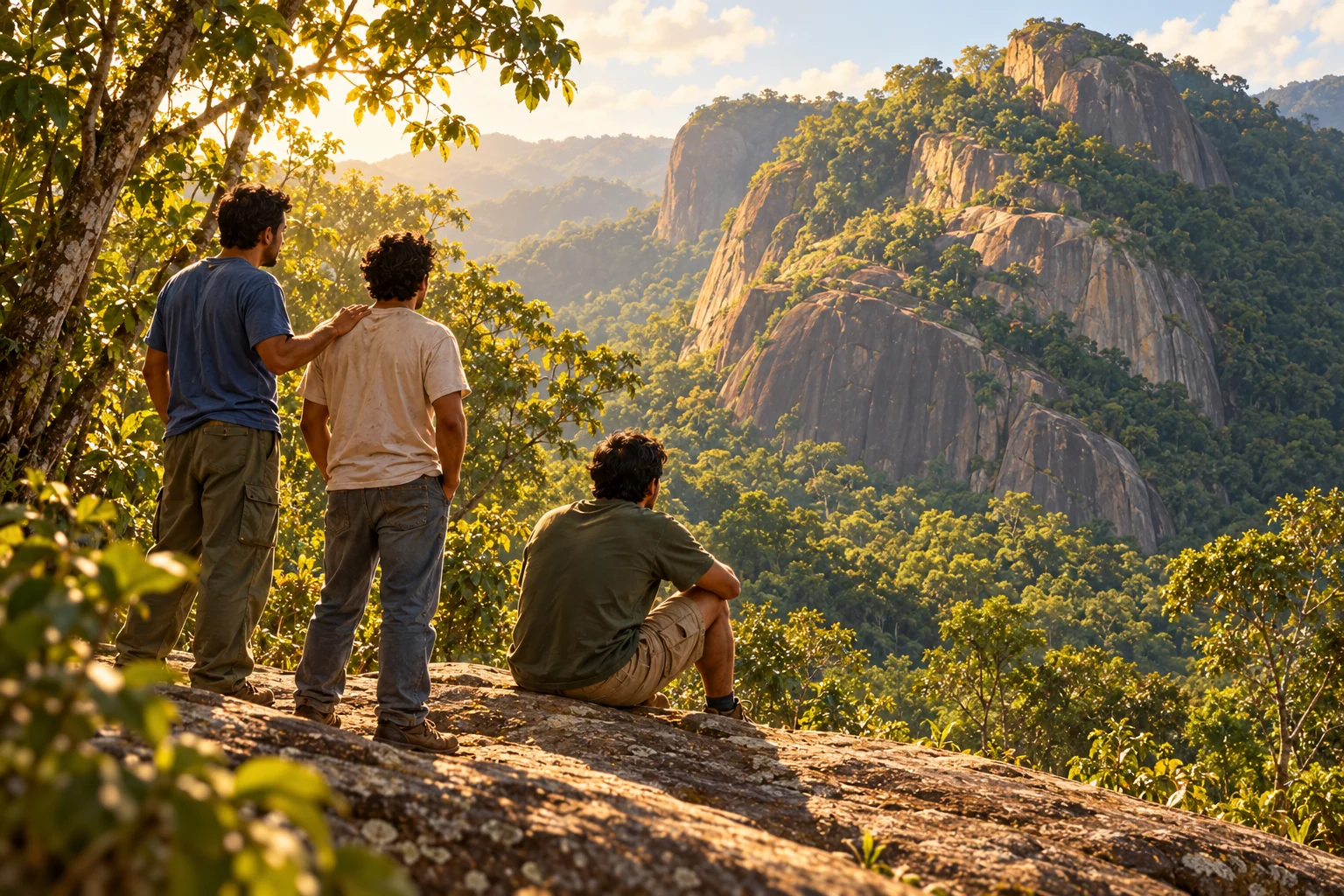
Sometime in the 2000s, I was the IT manager at a boarding high school in the countryside of Rio de Janeiro State, Brazil. Once a year, I stepped away from computers to organize the IPAE Adventure, a competition involving forest trails, rivers, mud, and outdoor challenges.
Before the event, I would go out with friends to explore and prepare a new route. One year, three of us were cutting our way through the forest with machetes and a sickle when we looked toward the huge rock formation beside the school.
Someone suggested adding a small climbing section.
I no longer remember whose idea it was. It may have been mine. More than twenty years have passed, and in the absence of evidence, I prefer to keep the case open.
We started climbing. We had no ropes, helmets, climbing equipment, or climbing training. We were still carrying the tools we had brought to clear the trail.
At first, it seemed easy. A crack gave us somewhere to place our hands. A ledge offered a foothold. Vegetation gave us something else to hold. We climbed a little farther, always concentrating on the next available grip.
Each successful move seemed to confirm that we could keep going.
Then we looked down.
Farther than we intended
I cannot tell you how high we were. I can tell you that the adventure stopped feeling like an adventure. Climbing up had been relatively simple because we could see the next place for our hands and feet. Going down was another matter. The footholds were below us, and many were impossible to see.
We might not be able to return the way we had come.
I remember a friend cutting off the wooden handle of the sickle and throwing it down. We watched it fall and waited. The time it took to reach the ground made the height feel much more real.
Now we were afraid. Our only apparent option was to keep going until we found another way out.
Eventually, we saw a flatter area where we might be able to walk through the vegetation. A much smoother section of rock separated us from it. Crossing meant helping one another, searching for tiny holds, and sometimes using our own bodies to support a friend’s foot.
There were no ropes and no protection if someone slipped. Even now, I do not like thinking too carefully about parts of that crossing.
We made it across. We found a path through the vegetation, continued toward the upper part of the formation, and eventually descended by another route.
When one of those friends and I remember that day, the strongest feeling is gratitude. We do not remember it as a climbing achievement.
Looking at the right scale
We had been paying attention during the climb. We carefully considered where to place a hand or foot. What we had failed to consider was where all those movements were taking us.
None of us had decided to become trapped on a rock face. We reached that situation through small decisions that seemed manageable at the time. One more crack. One more ledge. Each success encouraged the next attempt.
That memory leaves me with an uncomfortable lesson: success at the next move does not, by itself, tell us whether we are taking a good path.
Proverbs 4:26 invites us to consider the path of our feet. Proverbs 14:12 reminds us that a way can appear right while leading somewhere very different from what we expect. Those passages make me ask more than whether a particular step is possible.
Where is this direction taking me?
That question belongs in decisions about habits, relationships, money, work, and our spiritual lives. Small choices accumulate. It helps to pause while we still have room to reconsider.
There is another lesson in the memory. Once we recognized our mistake, simply returning was no longer an easy option. We needed a way out. Sometimes we need God’s wisdom before starting down a path. Sometimes we need to admit that we have gone too far and ask for help finding a way back.
I remember that day with gratitude, including gratitude for reaching safety. Before the next step, I want to look farther than the next handhold.
Scripture for reflection: Proverbs 4:26; Proverbs 14:12; Genesis 13:10–13; Psalm 18:32–33.